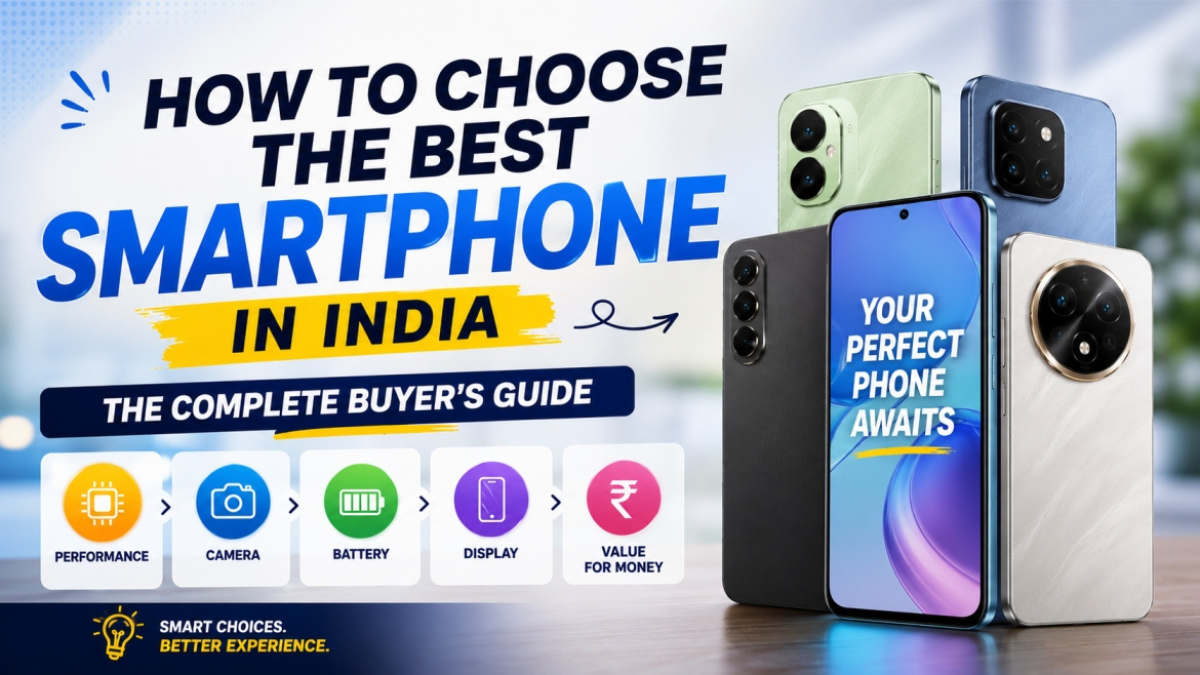
How to Choose the Best Smartphone in India (2026): The Complete Buyer’s Guide
Choosing a smartphone in India has never been more complicated — or more exciting. In 2026, you’re not just picking a device. You’re picking a camera system, a gaming rig, a payment terminal, an AI assistant, and a five-year daily companion, all rolled into one slab of glass and metal. This is the complete guide on How to Choose the Best Smartphone in India.
The Indian market is uniquely fierce. Brands like Samsung, OnePlus, Xiaomi, Realme, iQOO, and Apple compete with ruthless pricing, aggressive flash sales, and features that shift every quarter. What was flagship-grade last year is mid-range today. And what sounds like a deal on paper often disappoints in real-world use.
This guide cuts through the noise. No sponsored opinions. No spec-sheet obsession. Just honest, practical advice for every kind of buyer — from a college student on a ₹12,000 budget to someone ready to spend ₹1,20,000 on an iPhone.
Why Most Smartphone Buying Guides Fail You
Most guides rank phones by specs alone. More megapixels = better camera. Higher RAM = faster phone. Bigger number = better choice.
That’s not how real-world performance works.
A phone with a 200MP camera can produce muddy, over-processed photos. A phone with 12GB RAM can still stutter on heavy apps if the software is poorly optimised. A phone priced at ₹80,000 may not serve a student better than one at ₹25,000.
What actually matters is fit — the right phone for your specific use case, usage pattern, and ecosystem. This guide helps you figure that out first, then match it to a phone.
Step 1: Understand Your Primary Use Case Before Looking at Specs
Before you open Flipkart or Amazon, answer these five questions honestly:
1. What do I use my phone most for?
Social media scrolling, photography, gaming, business calls, video streaming, and navigation all stress a phone differently.
2. How long do I need the battery to last?
If you’re away from a charger for 12+ hours daily, battery capacity and fast charging matter more than camera.
3. Do I care about updates and long-term software support?
If you use your phone for 3–4 years, a brand that promises 4–5 years of Android updates is worth a premium.
4. What ecosystem am I in?
If your laptop is a MacBook and you use AirDrop daily, an iPhone suddenly makes logical sense even at higher cost. If you’re deep in Google Workspace, Android is frictionless.
5. Am I buying for me or someone else?
A phone for a senior citizen, a child, or a first-time smartphone user has completely different requirements than one for a power user.
Write your answers down. Keep them next to you as you read the rest of this guide.
Step 2: Set a Real Budget (Including What You’ll Buy With It)
India’s smartphone market is segmented clearly in 2026. Here’s an honest breakdown:
₹8,000 – ₹15,000: The Essentials Tier
Phones in this range handle calls, WhatsApp, YouTube, and basic photography. Don’t expect smooth gaming or long software support. Brands that play well here: Realme, Infinix, Redmi.
Best for: Senior citizens, first-time users, backup phones, children’s first phones.
What to expect: Plastic build, adequate display, mediocre cameras in low light, 2–3 years of usability before performance noticeably drops.
What to avoid: Spending more than ₹13,000 on a phone with a MediaTek Helio G series chip — you’ll hit a ceiling fast.
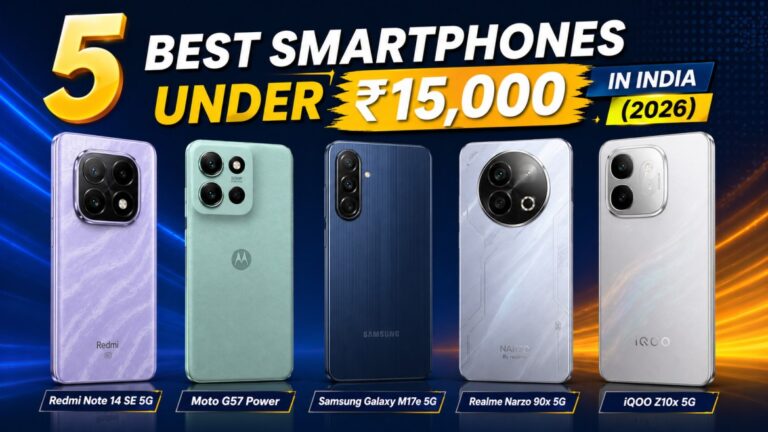
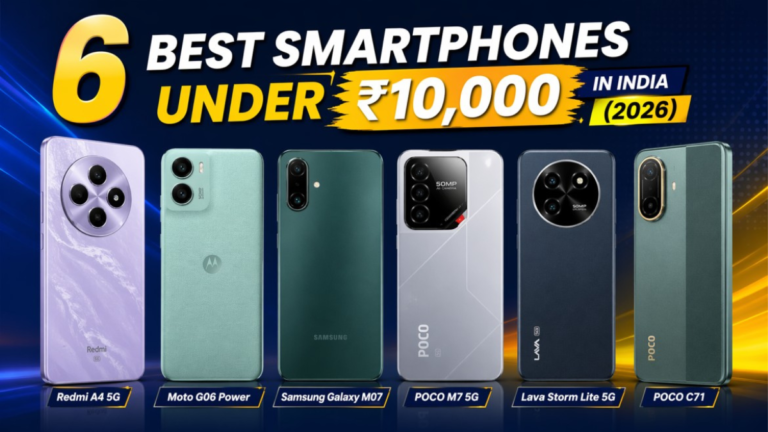
You can take a look at 6 Best Smartphones Under ₹10,000 in India (2026) and 5 Best Smartphones Under ₹15,000 in India (2026)
₹15,000 – ₹25,000: The Sweet Spot Tier
This is where Indian smartphones deliver the most value per rupee. Snapdragon 6s Gen 3 and MediaTek Dimensity 7300 processors power phones that handle Instagram Reels, Spotify, Google Maps, and casual gaming without breaking a sweat. Camera quality takes a meaningful leap here, especially in daylight.
Best for: College students, everyday users, people replacing an old budget phone.
Key brands: Redmi Note series, Realme Number series, Samsung Galaxy A series (A35/A55), Moto G series.
Watch out for: Brands stuffing this tier with bloatware and pushy ads (Xiaomi’s MIUI can be aggressive — consider the vanilla Android experience of Moto if that bothers you).
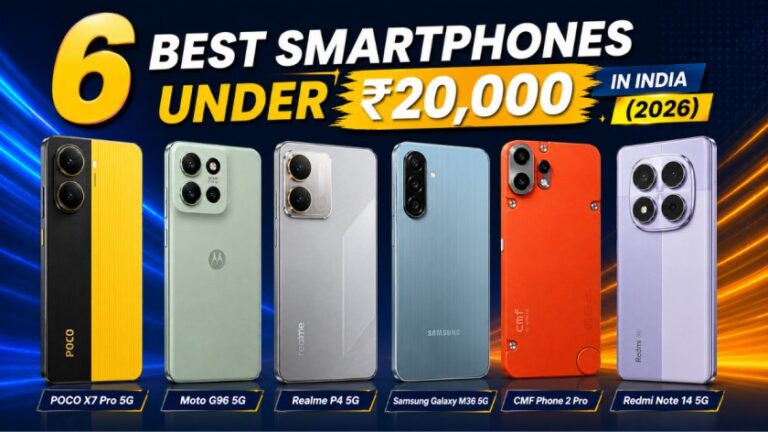
Also read: 6 Best Smartphones Under ₹20,000 in India (2026)
₹25,000 – ₹40,000: The Confident Mid-Range Tier
This is arguably the most exciting segment in 2026. You get near-flagship cameras, AMOLED displays with high refresh rates (90Hz–144Hz), fast charging (65W+), and 3–4 years of guaranteed Android updates from reputable brands.
Best for: Working professionals, photography enthusiasts on a budget, gamers who don’t want to spend flagship prices.
Top performers here: OnePlus Nord series, Samsung Galaxy A55/A56, iQOO Z9 series, Poco X6 Pro.
The hidden gem: Refurbished iPhones (iPhone 13, 14) often land in this price range and offer class-leading software support and camera consistency.
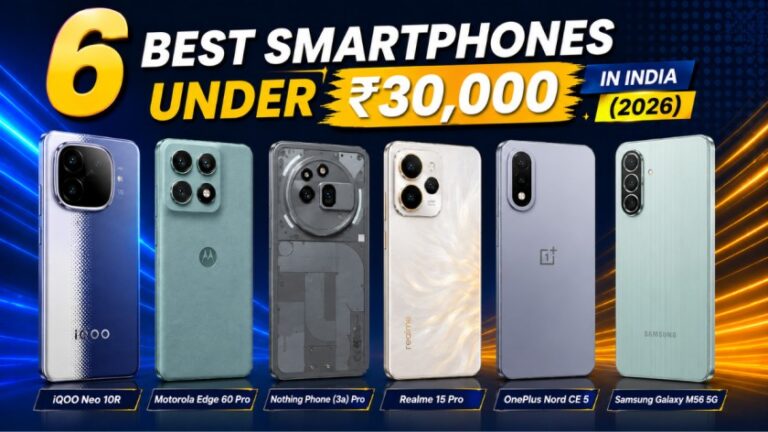
Also read: 6 Best Smartphones Under ₹30,000 in India (2026)
₹40,000 – ₹70,000: The Premium Tier
Performance anxiety disappears here. Snapdragon 8 Gen 3 and Dimensity 9300 chips power these devices. Cameras shoot across multiple focal lengths with dedicated periscope zoom on some. Build quality is glass and metal. Displays are brilliant indoors and outdoors.
Best for: Power users, content creators, people who replace phones every 3–5 years and want the investment to hold up.
Dominant players: Samsung Galaxy S24 FE, OnePlus 13R, Google Pixel 8a (exceptional for AI features and clean Android), iPhone 16 (when discounted during sales).
₹70,000 and Above: The Flagship Tier
You’re paying for the best available camera system, the fastest processor, the most durable build, and in many cases, a status symbol. In India, this means Samsung Galaxy S25 series, iPhone 16 Pro/Pro Max, Google Pixel 9 Pro, and OnePlus 13.
Best for: Professionals who bill their phone use as a business expense, photography lovers, Apple ecosystem users.
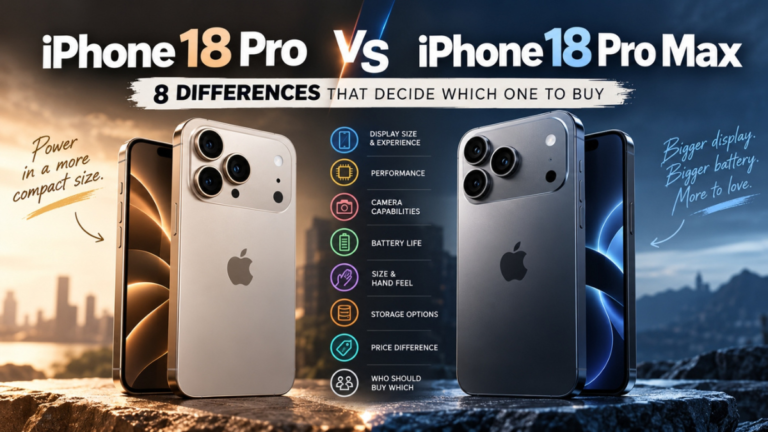
Honest reality check: The ₹1,20,000 iPhone 16 Pro Max takes better videos than a ₹40,000 phone. But for most tasks — email, WhatsApp, browsing, Netflix — a ₹30,000 phone does it just as well. Pay this premium only if you’ll genuinely use the delta. iPhone 18 is the latest and most premium phone available.
Step 3: Decode the Specs That Actually Matter
The smartphone industry loves feeding buyers specs that sound impressive but rarely translate to real-world improvement. Here’s what actually moves the needle.
Processor: The Most Important Spec You Can’t See
The chipset determines everything — gaming, photography processing, heat management, and how fast the phone ages.
In 2026, the clear hierarchy in India looks like this:
Tier 1 (Best performance): Snapdragon 8 Elite, Apple A18/A18 Pro, Dimensity 9400
Tier 2 (Excellent daily performance): Snapdragon 8 Gen 3, Dimensity 9300, Apple A17 Pro
Tier 3 (Great for mid-range): Snapdragon 7s Gen 3, Dimensity 7300, Snapdragon 6 Gen 3
Tier 4 (Adequate for basics): Helio G99, Snapdragon 4 Gen 2
Red flag: Avoid MediaTek Helio G85 or older Snapdragon 678/680 chips on phones priced above ₹18,000 — they’re being sold at an unfair markup. You need to remember this if you want to understand How to Choose the Best Smartphone in India.
RAM: When More Stops Mattering
For everyday use (social media, streaming, messaging): 6GB is enough.
For multitasking and running many apps simultaneously: 8GB is the comfortable ceiling.
For gaming and heavy workloads: 12GB adds tangible value.
Going from 12GB to 16GB to 18GB RAM? You’re paying extra for a spec that provides almost no noticeable real-world benefit unless you’re a developer running virtual machines.
Also note: Virtual RAM (or RAM expansion) is a software trick that uses storage as slow RAM. It’s not equivalent to physical RAM. Don’t let brands use this to make a 6GB phone sound like an 11GB phone.
Storage: Size and Speed Both Matter
128GB is the minimum to buy in 2026. Don’t accept less.
256GB is the practical sweet spot for most users.
512GB and above for heavy camera users and those who store lots of media locally.
Storage speed matters too. UFS 3.1 and UFS 4.0 make app loading, photo saving, and file transfers meaningfully faster. Budget phones often use eMMC 5.1, which is noticeably sluggish.
Check whether the phone has a microSD card slot. Many premium mid-range phones have dropped it. If you have an old card with content, factor this in.
Display: What Makes a Screen Feel Premium
Resolution: Full HD+ (1080p) is the minimum for a ₹15,000+ phone. Anything labelled HD+ (720p) above ₹12,000 is a ripoff.
Panel type: AMOLED/OLED produces deeper blacks, better contrast, and more vibrant colours than LCD/IPS. AMOLED also enables always-on display and consumes less battery on dark mode. Worth prioritising from ₹15,000 upward.
Refresh rate: 60Hz feels choppy once you’ve used 120Hz. From ₹20,000 and above, look for at least 90Hz. 120Hz is the standard for premium feel. 144Hz is a bonus for gamers but makes minimal difference in daily use.
Brightness: Critical for outdoor visibility. Look for peak brightness above 1000 nits for outdoor use. Phones above 2000 nits are genuinely usable under harsh Indian summer sunlight.
Protection: Corning Gorilla Glass 5 or higher. Victus 2 on premium devices. Avoid phones that don’t specify glass protection — they’re likely using unnamed cheap glass.
Camera: Stop Chasing Megapixels
More megapixels do not mean better photos. A 50MP sensor with a good lens and well-tuned software beats a 200MP setup with a mediocre sensor every time.
Here’s what actually determines camera quality:
Sensor size: Larger sensors capture more light. Look for 1/1.56″ or larger for excellent low-light. Apple and Samsung’s flagship sensors are among the largest.
Aperture: Lower f-number (e.g., f/1.8 vs f/2.4) means the lens lets in more light. Matters significantly at night.
OIS (Optical Image Stabilisation): Reduces blur in low-light photos and shaky videos. Non-negotiable for anyone who shoots videos or night photos frequently. Don’t confuse with EIS (electronic stabilisation), which is software-based and less effective.
Periscope zoom: True optical zoom beyond 3x requires a periscope telephoto lens. Anything above 3x without periscope is digital zoom — which means cropped and degraded image quality.
Video capabilities: 4K30fps is standard at mid-range and above. 4K60fps for smoother video. Log recording for professionals. Check if the front camera also does 4K — many phones limit it to 1080p.
Software processing: Google’s Pixel phones have modest hardware but industry-leading computational photography. Samsung tends to over-sharpen and over-saturate. Apple produces the most film-like, natural output. OnePlus leans cooler and more neutral. None is objectively “best” — it’s taste.
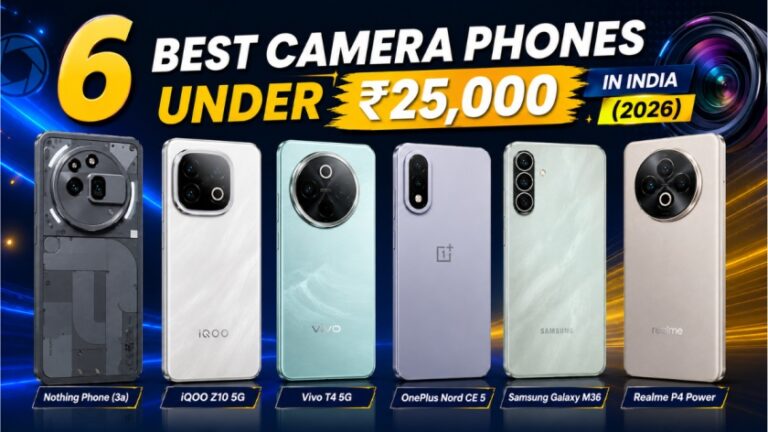
You can refer: 6 Best Camera Phones Under ₹25,000 in India (2026)
Battery: The Spec Indian Users Undervalue
In a country where power cuts still happen, where commutes are long, and where charging points aren’t always accessible, battery life matters enormously.
4,500 mAh is the baseline in 2026. Acceptable.
5,000 mAh is the standard. Good.
5,500 mAh and above is excellent for heavy users.
But capacity alone doesn’t tell the full story. A phone with a 5,000 mAh battery and a power-hungry processor can drain faster than a 4,500 mAh phone with an efficient chip. Battery life is about the processor’s energy efficiency as much as the cell’s capacity. Battery is very important if you want to comprehend How to Choose the Best Smartphone in India.
Charging speeds in India in 2026:
- 18W–33W: Budget to mid-range. Fine for overnight charging.
- 45W–67W: Premium mid-range. Roughly 0 to 100% in 45–60 minutes.
- 80W–120W: High-end. Fully charged in 20–35 minutes.
- 240W: Exists on some OnePlus/iQOO flagships. Charges in under 10 minutes. Impressive, but degrades battery health faster over time.
Wireless charging is still largely a premium feature in India. Native Indian chargers for most homes are still 5W–15W wireless, so unless you invest in a faster wireless charger, this feature delivers slower speeds than wired.
Step 4: The Indian Market Has Specific Realities — Account for Them
Heat Management Is Non-Negotiable
India’s summer temperatures regularly cross 40°C across large parts of the country. A phone that throttles (slows its processor to prevent overheating) on a hot Pune afternoon in May is actively hurting your productivity. Flagship Snapdragon chips with vapour chamber cooling manage this better than budget chips running hot without cooling solutions. Read reviews that specifically test thermal throttling.
Dual SIM Is a Standard Expectation
Most Indian users carry two SIMs — one primary, one for cheaper data from a different operator. Ensure the phone supports dual physical SIMs (Nano + Nano), or at minimum, dual SIM with eSIM support. Some imported iPhones are single SIM — verify before buying.
5G Band Support Matters More Than Advertised
Not all 5G phones support the same bands. India’s 5G rollout uses specific n78, n77, and n28 bands. A cheap “5G phone” might support only two or three bands and miss your city’s network entirely. Jio and Airtel’s 5G coverage maps are now publicly available — cross-reference the phone’s supported bands with your city’s active bands before committing.
After-Sales Service in India
A brand’s service network matters as much as its product in India, especially in Tier 2 and Tier 3 cities. Samsung and Apple have the widest service networks. OnePlus and iQOO have strong presence in metros. Realme and Xiaomi have improved significantly but can still be patchy. Before buying a niche brand, check for an authorised service centre in your city.
Software Bloatware Reality
Indian retail units of Xiaomi, Realme, and Samsung often come pre-loaded with third-party apps and sometimes show ads in the notification drawer or system UI. This is not always disclosed. Factor in the time to clean up the experience. Motorola and Google Pixel phones offer the cleanest out-of-box Android experience.
Step 5: Where and When to Buy in India
Platforms and Price Parity
Flipkart and Amazon India are the two dominant platforms. Prices are usually within ₹200–500 of each other. Both run major sales events:
- Big Billion Days / Great Indian Festival (October): The biggest discounts of the year, timed around Diwali. If you can wait, this is the best time to buy a premium phone.
- Republic Day Sale (January): Good deals, especially on older flagships.
- Independence Day Sale (August): Mid-year refresh with decent offers.
Brand websites (OnePlus, Samsung, Apple India) occasionally offer exclusive launch deals and EMI options with zero cost on HDFC, ICICI, and SBI cards.
Offline stores (Croma, Reliance Digital, local dealers) let you physically hold the phone before buying — valuable for assessing build quality and display in person. Prices can be negotiated, especially for older models.
New vs Refurbished
Refurbished iPhones bought from certified sellers (Cashify, Apple Certified Refurbished, Flipkart Refurbished) often represent exceptional value. An iPhone 14 at ₹35,000 refurbished beats most Android phones at that price for software updates, camera consistency, and resale value. Ensure the phone comes with a warranty and has a battery health above 85%.
Exchange Offers: Do the Math
Exchange offers are often misleading. The “extra” exchange value is frequently baked into an inflated phone price. Use websites like Cashify or Togofogo to check the actual resale value of your old phone, compare it to the exchange offer, and take whichever is higher.
Step 6: Brand-by-Brand Honest Assessment (2026)
Apple (iPhone)
Best for: Long-term users who want 6+ years of iOS updates, content creators who want consistent video quality, and anyone in a Mac/iPad ecosystem.
Weaknesses: Highest price, no microSD, proprietary charging (though USB-C is now universal), smaller battery historically (improved in iPhone 16 Pro Max).
Honest take: The software experience, privacy features, and resale value make iPhones genuinely worth the premium for the right buyer. But for someone who uses WhatsApp, YouTube, and UPI, an iPhone 13 at ₹45,000 serves them as well as a ₹1,20,000 iPhone 16 Pro Max.
Samsung
Best for: Display lovers (Samsung makes the best AMOLED panels), users who want DeX (desktop mode), and buyers who want a wide service network across India.
Weaknesses: One UI can feel bloated, aggressive pre-installs, and historically slow software updates at mid-range (improving with Galaxy AI features in 2025–26).
Honest take: Samsung’s Galaxy A series (A35, A55, A56) is genuinely excellent in mid-range. The Galaxy S25 Ultra is one of the best all-around phones in existence — if you can afford it.
OnePlus
Best for: Speed demons. OnePlus phones charge fast, perform fast, and run one of the smoothest Android skins (OxygenOS, though it’s merged somewhat with OPPO’s ColorOS in recent years).
Weaknesses: Camera still trails Samsung and Apple in low light, and the brand has moved progressively upmarket, losing some of its underdog value appeal.
Honest take: The OnePlus 13 is a compelling flagship alternative. The Nord series remains a solid mid-range choice.
Google Pixel
Best for: Pure Android lovers, AI feature enthusiasts (Pixel’s real-time call screening, live transcription, and Photo Unblur are genuinely useful), and anyone who values software over hardware.
Weaknesses: Limited offline service centres in India, no eSIM support in Indian variants, and sometimes underwhelming hardware specs for the price.
Honest take: The Pixel 8a is one of the best phones at ₹40,000–₹50,000 for software experience and camera. Google’s 7-year update promise is industry-leading.
Xiaomi / Redmi / POCO
Best for: Spec-per-rupee maximisers. No brand ships faster hardware at lower prices in India.
Weaknesses: MIUI/HyperOS has significant ads and bloatware, aggressive notifications, and the brand has a mixed track record on software update longevity.
Honest take: Redmi Note series remains India’s bestselling smartphone line for a reason — the value proposition is real. Just budget 30 minutes after purchase to disable ads and bloatware.
Realme / iQOO / Vivo / OPPO
Best for: Budget-to-mid buyers who want fast charging and decent cameras.
Weaknesses: Software update promises are inconsistent, and brand proliferation (Realme, OPPO, OnePlus, iQOO all share parent companies) means features get shuffled confusingly between lineups.
Honest take: iQOO’s gaming-focused phones punch above their price in raw performance. Realme’s Number series remains strong at ₹15,000–₹25,000.
Motorola
Best for: Clean Android experience, long battery life, and reliable build at mid-range.
Weaknesses: Camera is consistently the weak link. Not competitive with Redmi or Samsung for photography.
Honest take: If you hate bloatware and want a phone that just works, Moto G series is one of the most underrated options in India.
Step 7: Make Your Decision Using This Framework
Use this decision tree before you pull the trigger:
- Lock your budget — not “up to ₹X” but “exactly ₹X, no exceptions.”
- Identify your top two use cases — camera, gaming, battery, clean software, ecosystem.
- Shortlist three phones using sites like GSMArena, 91Mobiles, and Smartprix for detailed specs comparison.
- Read or watch two independent reviews — not brand content, not sponsored comparisons. GSMArena, Mrwhosetheboss, and GadgetBridge offer balanced coverage.
- Check software update track record — how long did the brand support the previous model in the same series?
- Verify service centre proximity — use the brand’s official store locator.
- Set a buy date — if a big sale is within 4–6 weeks, wait. If not, buy now.
Step 8: Frequently Asked Questions
Q: Which is better in 2026 — iPhone or Android for Indian users?
There’s no universal answer. iPhones are superior for long-term software support, consistent camera output, privacy features, and Apple ecosystem integration. Android (specifically OnePlus, Samsung, and Pixel) wins on customisation, charging speed, microSD, and value. If you have a ₹40,000 budget and no existing Apple ecosystem, a mid-range Android serves you better. If you’re upgrading from an older iPhone and value consistency, staying in iOS makes sense.
Q: Is 5G actually worth it in India right now?
Yes — not because 5G is critical today, but because 4G phones bought now will feel outdated much sooner. Jio True 5G and Airtel 5G Plus have rolled out in all major Indian cities. If you’re buying a phone for 3+ years, get a 5G phone. Just verify it supports the right bands for your carrier.
Q: What is the best smartphone under ₹20,000 in India in 2026?
The Redmi Note 14 Pro, Realme 13 Pro, and Samsung Galaxy A25 consistently rank at the top of this segment. For clean software, the Moto G85 is excellent. Check current prices on Flipkart and Amazon, as these shift with sales.
Q: Should I buy a phone with 8GB RAM or 12GB RAM?
For most users, 8GB RAM handles everything smoothly — multiple browser tabs, social apps, camera, streaming. 12GB is meaningful if you game heavily (BGMI, COD Mobile) or frequently switch between many apps. Don’t pay a large premium just for extra RAM if you’re not a power user.
Q: How do I know if a phone’s camera is good without testing it?
Look for: sensor size (bigger is better), OIS presence, DxOMark or GSMArena camera score, and independent YouTube reviews with real-world sample shots. Brand spec sheets are marketing tools — they highlight what sounds good, not what produces great photos.
Q: Is buying a refurbished smartphone safe in India?
Yes, if you buy from certified sellers. Cashify Assured, Apple’s Certified Refurbished program, and Flipkart Refurbished with Seller Guarantee are reliable. Avoid unverified sellers on OLX or local shops without a warranty. Always check battery health, verify IMEI, and confirm the phone is carrier-unlocked.
Q: Which Indian city has the best 5G coverage in 2026?
Mumbai, Delhi, Bangalore, Chennai, Hyderabad, Kolkata, and Pune have near-complete Jio and Airtel 5G coverage. Tier 2 cities like Lucknow, Ahmedabad, Indore, and Nagpur have substantial but not comprehensive coverage. Use the Jio and Airtel network checker with your specific area before deciding on a 5G phone purely for network reasons.
Q: What happens to my phone’s performance after 2–3 years?
Regardless of brand, you’ll notice: slower app loading, reduced battery life, occasional lag in apps that have been updated to be heavier. Android updates can also slow older phones if the hardware doesn’t support new demands. Buying a phone with a top-tier chipset today gives you a longer runway. Phones with official software updates past 3 years (Google, Samsung, Apple) age better than those that stop at one Android update.
The Bottom Line
The best smartphone for you in India in 2026 is the one that fits your budget, solves your specific problems, lasts long enough to justify its price, and comes from a brand you can trust to support it.
No single phone wins every category. The iPhone 16 Pro Max takes the best videos but costs more than a laptop. The Redmi Note 14 Pro offers stunning value but won’t get security patches in 2029. The Pixel 9 Pro has the smartest AI features but limited service centres outside metros.
Be honest about what you actually use your phone for. Spend your budget on the specs that serve those uses. Don’t buy for what a phone can do on paper — buy for what it will do in your pocket, on your commute, and in your hands at 11pm when you’re catching up on messages.
That’s the phone worth buying.
Also read: 5 Best Gaming Phones Under ₹20,000 in India (2026)